Under NDA — to request access write to 4mhaig@gmail.com
adidas publishes content across hundreds of touchpoints at the same time — campaign pages, emails, app banners, partner sites. The problem was that the tools used to do that had piled up over the years. By the time this project started, teams were juggling 11 different systems just to get one campaign out the door.
Most of their day wasn't spent creating. It was spent moving files between tools, chasing the one person in another team who could do the step only they had access to, and rewriting the same content in slightly different formats for each market. The creative work happened in between.
"I spend half my day doing things the tool should do for me."
Content Manager — market shadowing session"By the time we publish, the campaign window has already shifted."
Market Activation Lead — shadowing session
Challenge, impact, and role — overview from the project brief
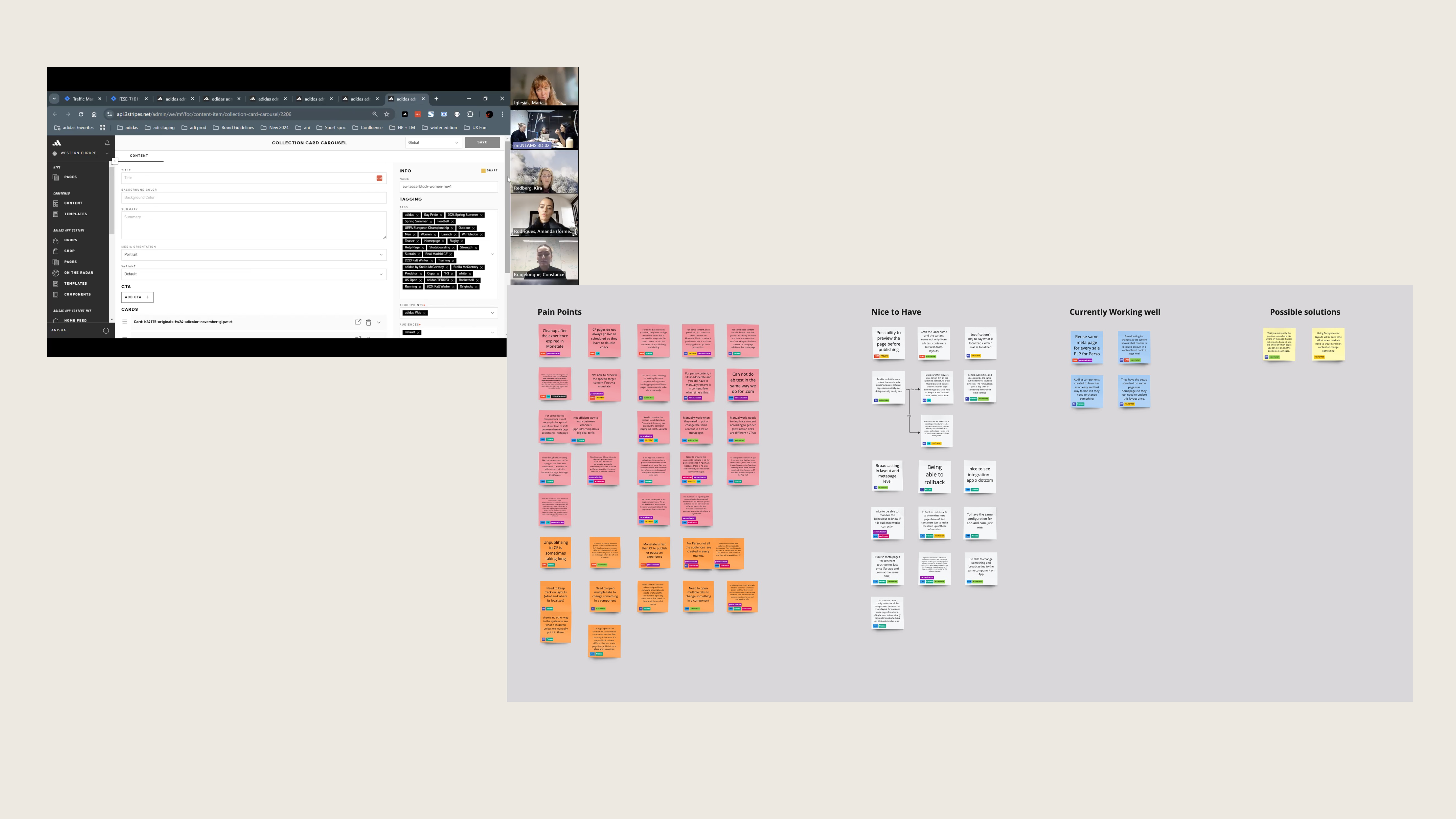
We started by sitting with the people who used the tools every day. We ran shadowing sessions with market teams and mapped every tool touched in a single campaign lifecycle — from the initial brief to the moment something went live. The pattern was impossible to miss: people had learned to work around the system, not with it.
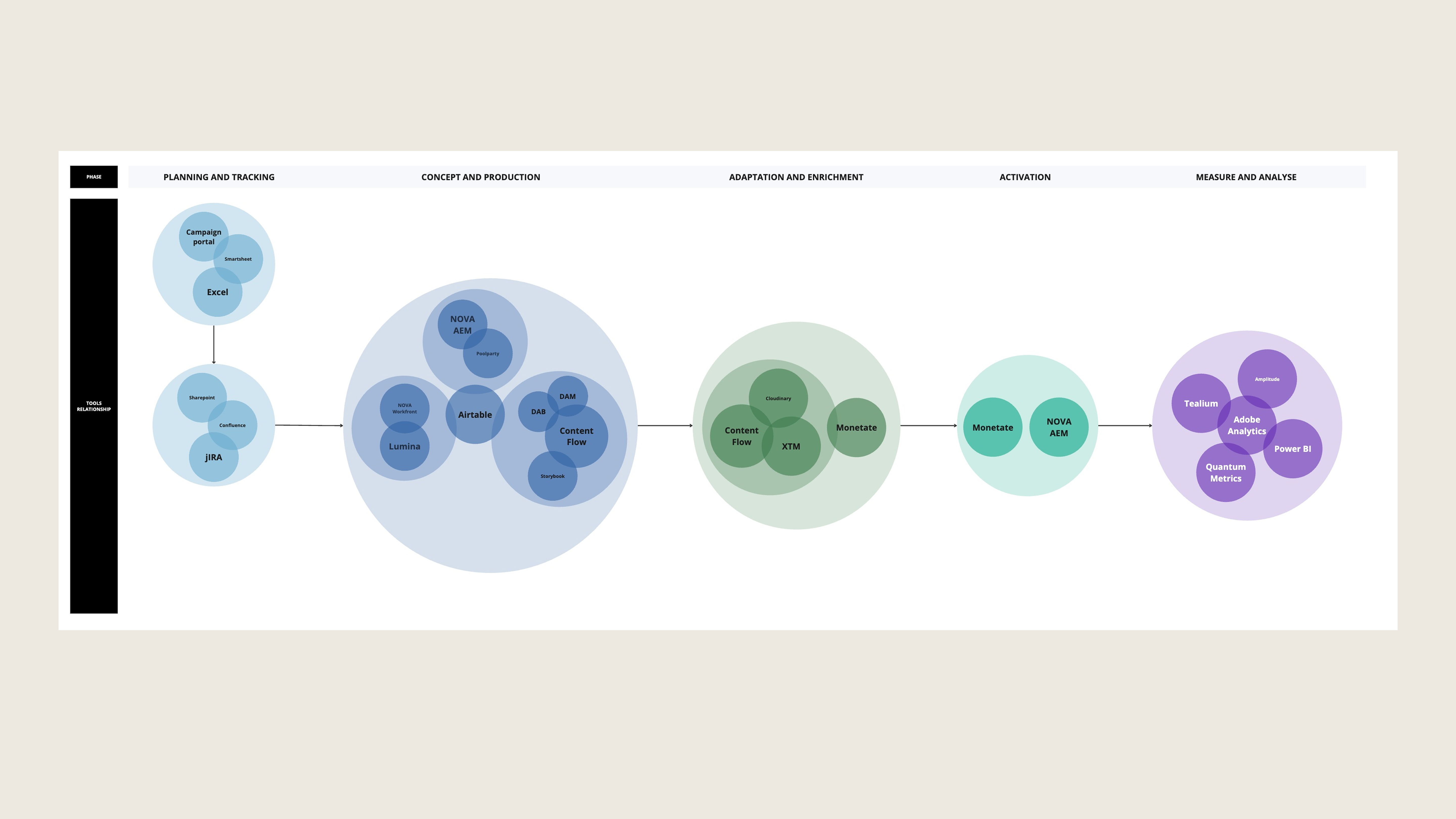
11 systems involved in a single campaign — planning, creation, localisation, scheduling, publishing. Many overlapping, none connected. Each one a different way of doing the same thing.
On average, teams switched between 6 to 8 different tools to publish one content piece. Adapting for local markets wasn't a structured step — it was something each team figured out on their own.
Personalisation always happened after the content was already made — templates duplicated and edited by hand for each audience. There was no way to think about variation while creating.
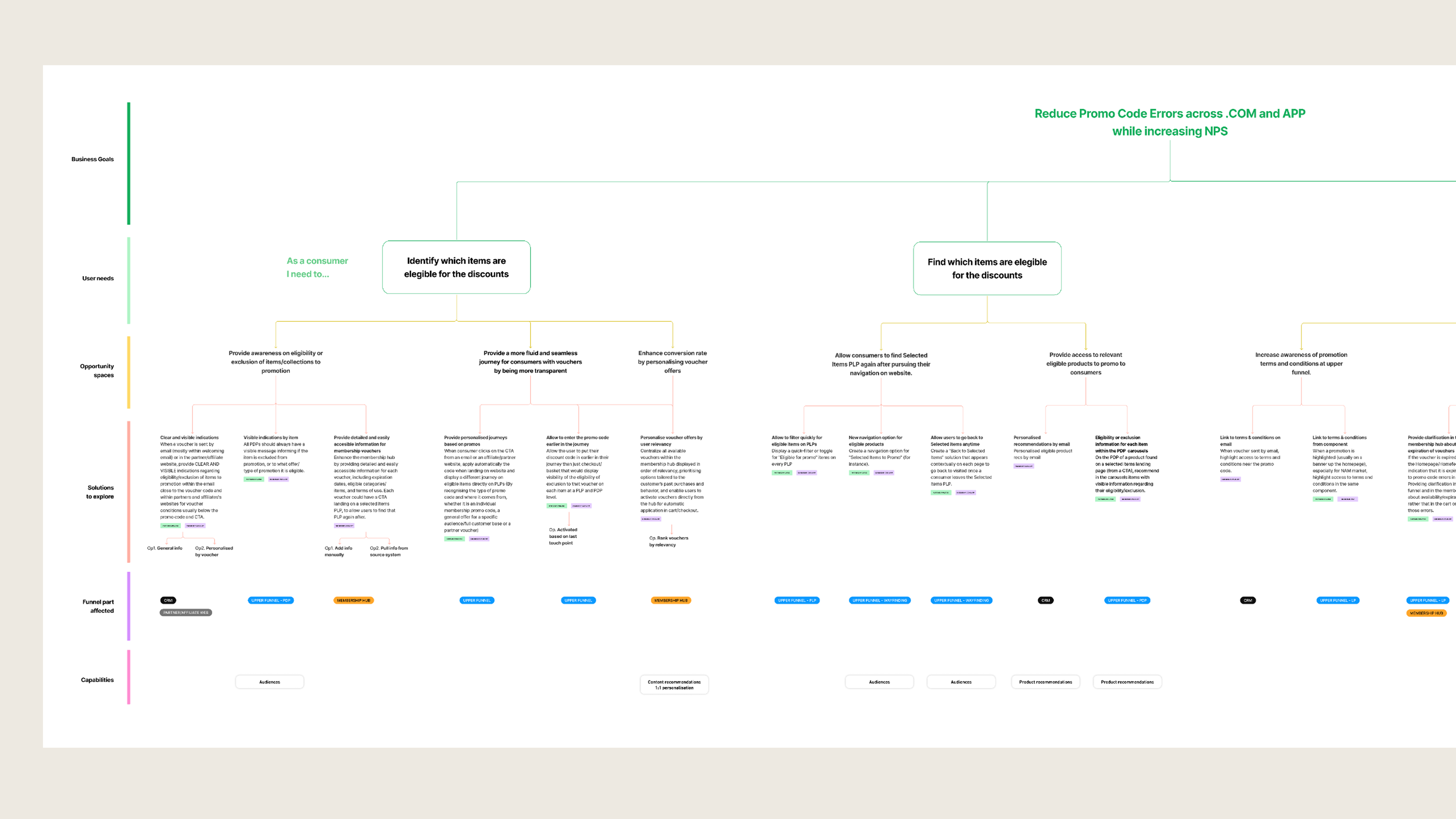
We turned all of this into a set of product requirements grounded in real feedback — not assumptions. What users actually needed, what the old system could and couldn't do, and where the real blockers were.
Tools mapping across the full campaign lifecycle — from planning to measure and analyse
Cluster insights from market shadowing sessions — pain points, what works, possible solutions
The new CMS brings creation, localisation, and publishing together in one place. You can see what's live, what's waiting for review, and what's blocked — without checking five different tools. Personalising content for different audiences is something you do while creating, not after the fact. And every market team works from the same foundation, adapting what they need to without starting from scratch every time.
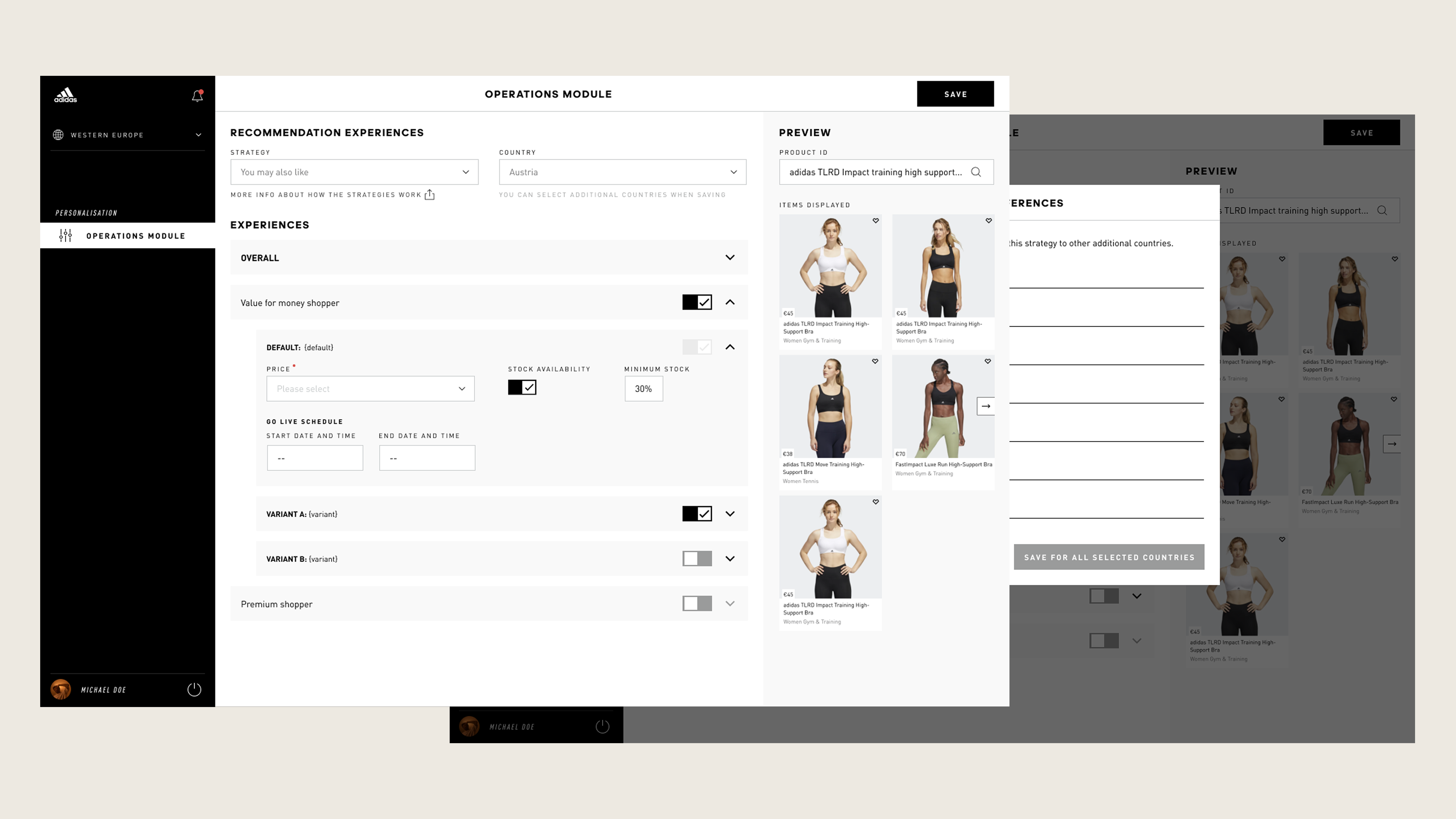
Sample of final designs — happy path through the Operations Module: strategy, country, product, segmented experiences, save
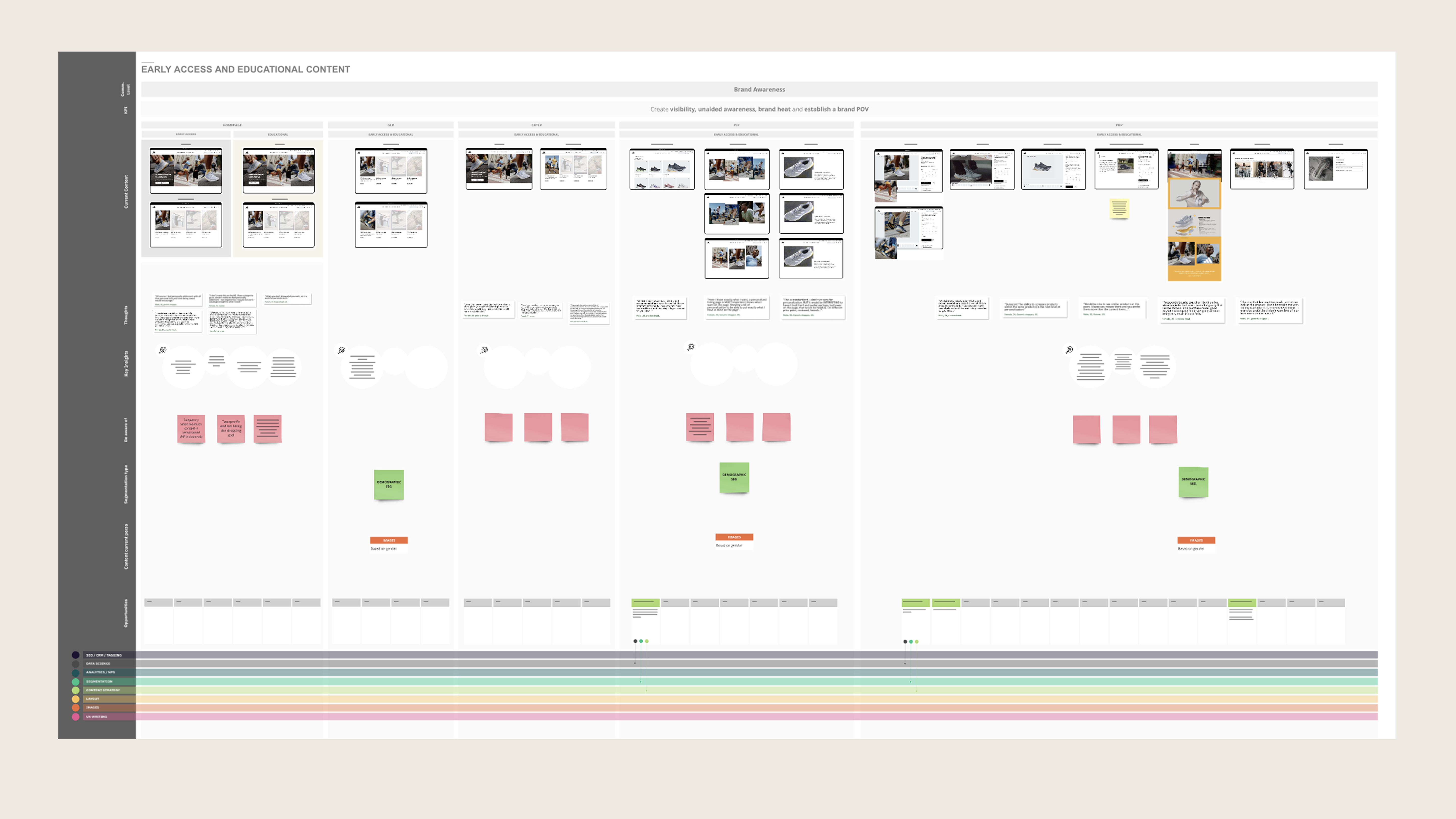
Customer journey · Design language components · Final design samples · Mockups for testing
| Before | After | |
|---|---|---|
| System | 11 tools for briefing, creation, localisation, and publishing — none of them connected | One single platform — campaign pages, emails, app, partner sites, all in the same place |
| Localisation | Each market team rebuilt global assets from zero — inconsistent results and duplicated effort | Local teams adapt, not rebuild — they work within a shared structure, so global intent always comes through |
| Personalisation | Handled after content was finished — templates copied and edited by hand for each audience | Built in from the start — you set up audience variations while creating, not after |
| Visibility | Campaign status tracked in spreadsheets and long email threads — nobody had the full picture | Everyone sees the same thing — what's live, what's in review, what's blocked, all in one view |
| Speed | Content took longer to produce than the campaign window it was made for | 54% faster content creation — less time on tooling, more time on the actual work |